
2026-09-07 · Marcus Chen
How Santa Ana Winds Increase Dust in Irvine Air Ducts
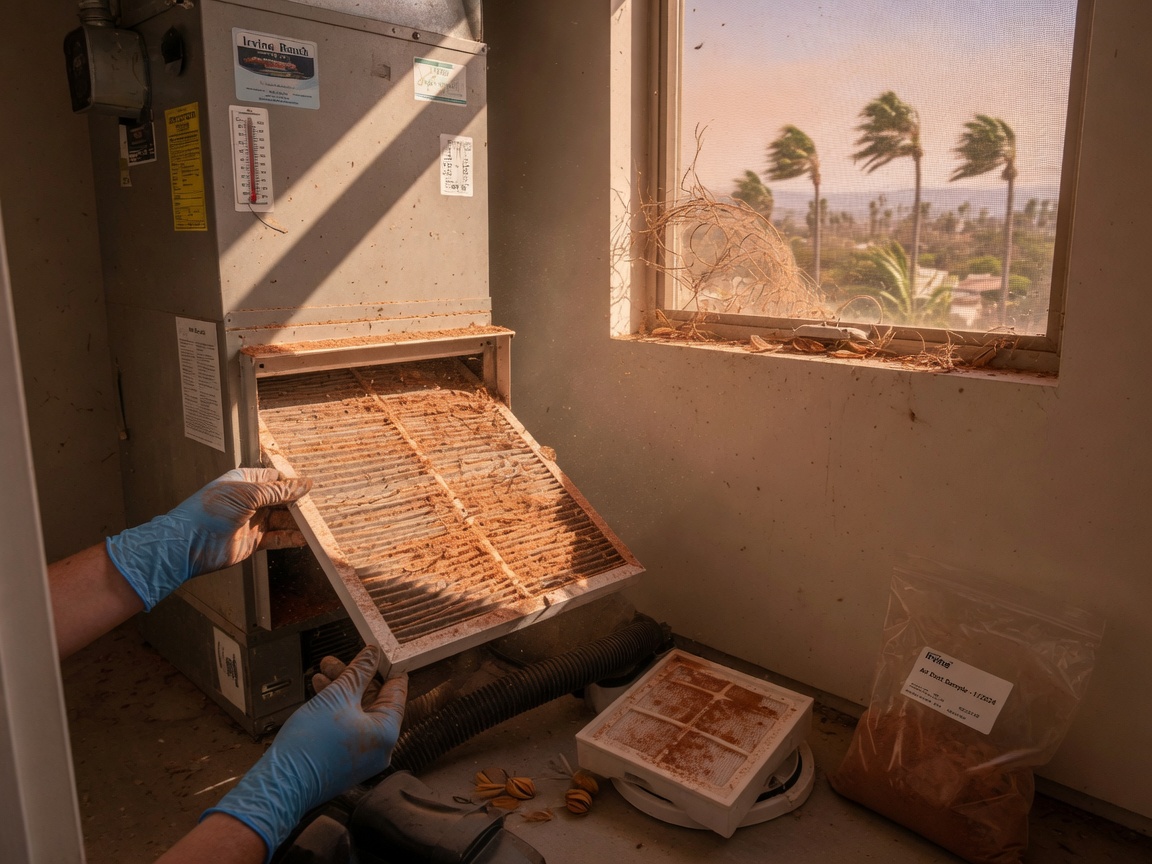
Santa Ana winds increase dust loading in Irvine air ducts by pulling dry air across the county and forcing fine particles through exterior vents, attic seams, and return grilles in homes throughout University of California Irvine, Woodbury, Northwood, Oak Creek, Portola Springs, Great Park, Spectrum, and Quail Hill.
How Santa Ana Winds Transport Dust Across Orange County
These winds originate east of the mountains and descend with low humidity and sustained speeds that stir up soil from open lots and agricultural edges near Lake Forest and Tustin. The particles range from coarse sand to respirable silt that easily passes through standard filter media once the system fan cycles on. In Irvine’s mild Mediterranean climate, the dry spells between rain events leave duct interiors with static charge that attracts and holds the incoming dust rather than letting it exit through supply registers.
Why Irvine Housing Stock Captures More Dust During Wind Events
Most homes in Northwood and Woodbury feature attic-mounted air handlers with flex duct runs that develop small gaps over 10–15 years of thermal cycling. When Santa Ana pressure differentials hit 0.5–1.0 inches of water column, outside air is drawn inward through those gaps faster than the return side can filter it. Newer construction in Portola Springs and Great Park uses tighter envelopes yet still relies on roof vents that act as direct entry points for wind-driven dust during October through January peaks.
Seasonal Patterns and Interaction with Local Terrain
The winds typically arrive after the first cool front and before winter rains, coinciding with the period when homeowners run heating cycles that move air continuously through the ducts. Irvine Regional Park and the open spaces around Orange County Great Park provide fetch for additional dust entrainment. Residents near the Spectrum and Quail Hill report visible layers on registers within days of a multi-day wind event, while nearby cities such as Costa Mesa and Newport Beach experience similar but slightly moderated effects due to marine influence.
Observable Signs and When to Schedule Service
Homeowners notice increased dusting on surfaces, musty odors when the system starts, and higher allergy symptoms during wind periods. Checking filter loading every 30 days and inspecting for gaps around attic ducts provides early indication. Residential air duct cleaning restores capacity after heavy loading events, while the related post on pollen buildup explains how wind-driven dust compounds with spring allergens. What affects air duct cleaning costs in Irvine homes outlines variables such as duct length and access points common in local tract homes.
Reducing Infiltration in Practice
Sealing accessible seams with mastic and adding weather-stripped covers on roof vents before wind season limits entry points. Upgrading to MERV-13 media in the main filter reduces the fraction that reaches the coils. Scheduling inspection after the first strong Santa Ana event each year keeps systems clear without unnecessary service calls in neighborhoods where duct runs average 80–120 linear feet per residence.